Your Analytical methods support begins here
NovaCMC Consulting™
About: NovaCMC Consulting brings over 12 years of experience supporting analytical development across the full product lifecycle—from clinical development through commercial launch and post-market support.We have worked on a range of biologics, including enzymes, monoclonal antibodies, and PEGylated molecules, across therapeutic areas such as enzyme replacement therapy, oncology, and hematology.Our expertise spans analytical method development, validation, specifications, and regulatory readiness, with a strong focus on ensuring methods are fit-for-purpose and aligned with BLA submission expectations. We also support post-commercial challenges, including method lifecycle management, investigations, and continuous improvement.

METHOD DEVELOPMENT
Separations, Identification and Purity
We Provide you with experince-driven chromatography methods tailored to your molecule that you can test in your lab, delivering high precision, repeatability, reproducibility, and sensitivity for low-level impurity detection, intact protein, fragments, aggregates, free PEG, detergents (PS20), as well as identifications with glycan mapping and peptide mapping methods.Expertise includes RP, SEC, and IEX methods using UV, PDA, FLR, and CAD detection.
METHOD DEVELOPMENT
Package Integrity and Test Method Selection (USP 1207), Subvisible Particle counts (USP 788) and Raw materials ID methods (with FTIR)
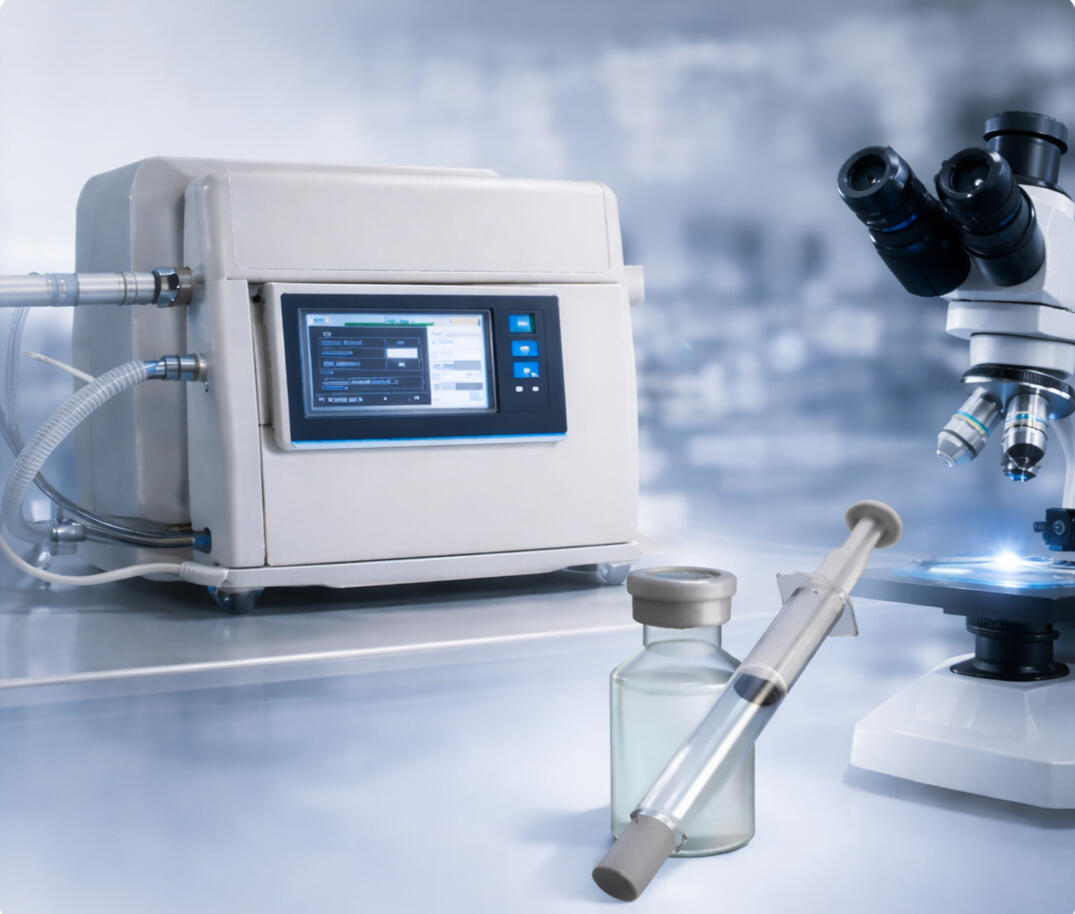
We develop experience-driven container closure integrity (CCI) methods that are rapid, highly sensitive, and designed to minimize false failures. Our methods can be implemented in your internal laboratory or at contract testing facilities, supporting a range of container systems including vials and combination products such as prefilled syringes containing high-concentration protein formulations.We also provide extensive experince-driven support for subvisible particle analysis in alignment with USP <788> requirements and identification of raw materials with FTIR methos.
Qualification, Validation and Transfer
Feasibility Plan, Validation Protocols, Transfer Checklist Protocol
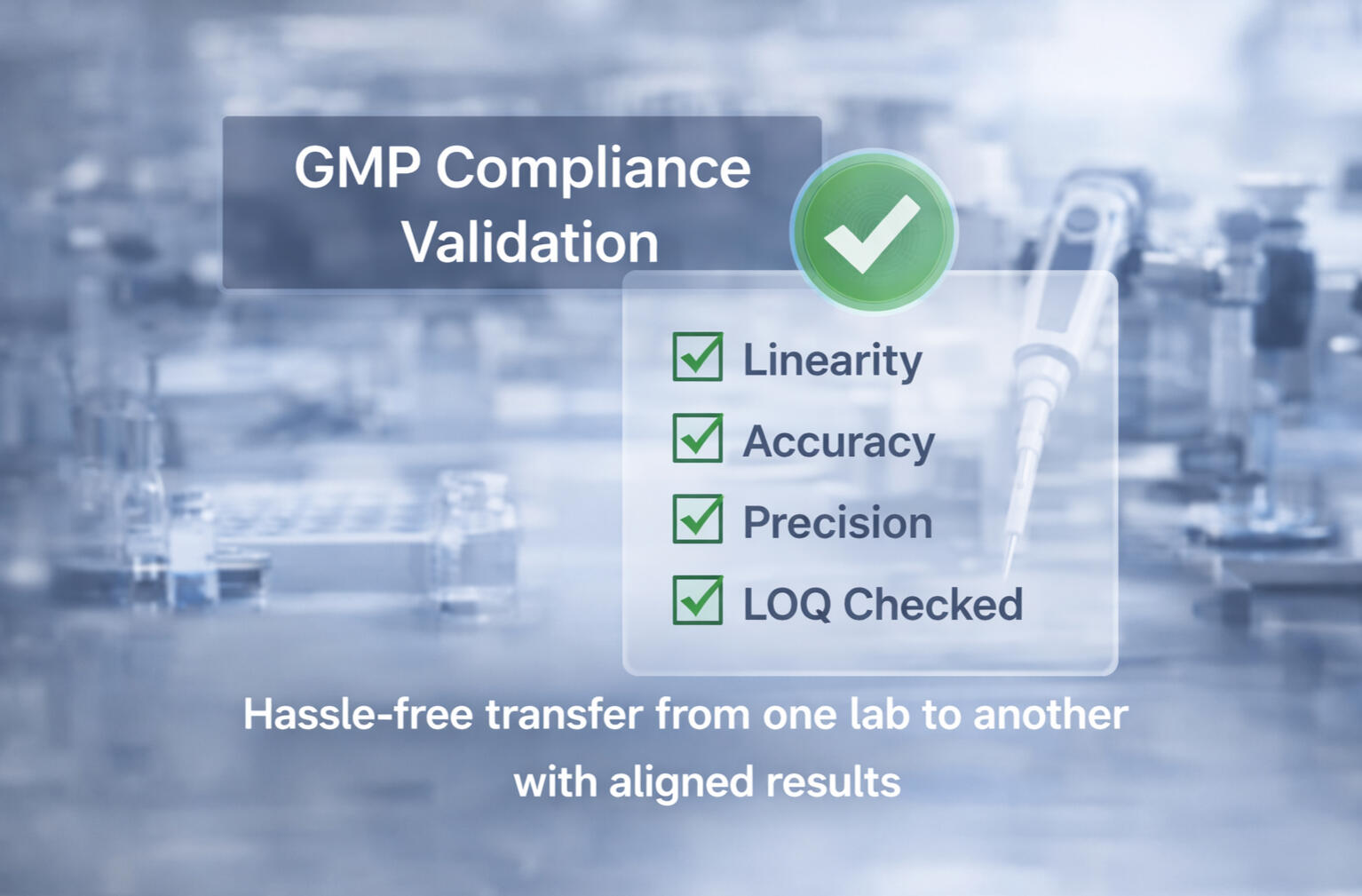
With extensive global experience in validation and method transfer, we develop custom-tailored validation protocols aligned with your molecule, method, and regulatory strategy meeting ICH guidelines Q2 (R1 and R2). Our approach ensures all key parameters are addressed, including establishing appropriately sensitive limits of quantitation to satisfy your specification need for BLA submission.We provide ready-to-execute transfer protocols designed to support seamless implementation across laboratories.
Comparability Studies, CQA, Process Impurity Mapping, Reference Standard Program and Post marketing Concerns
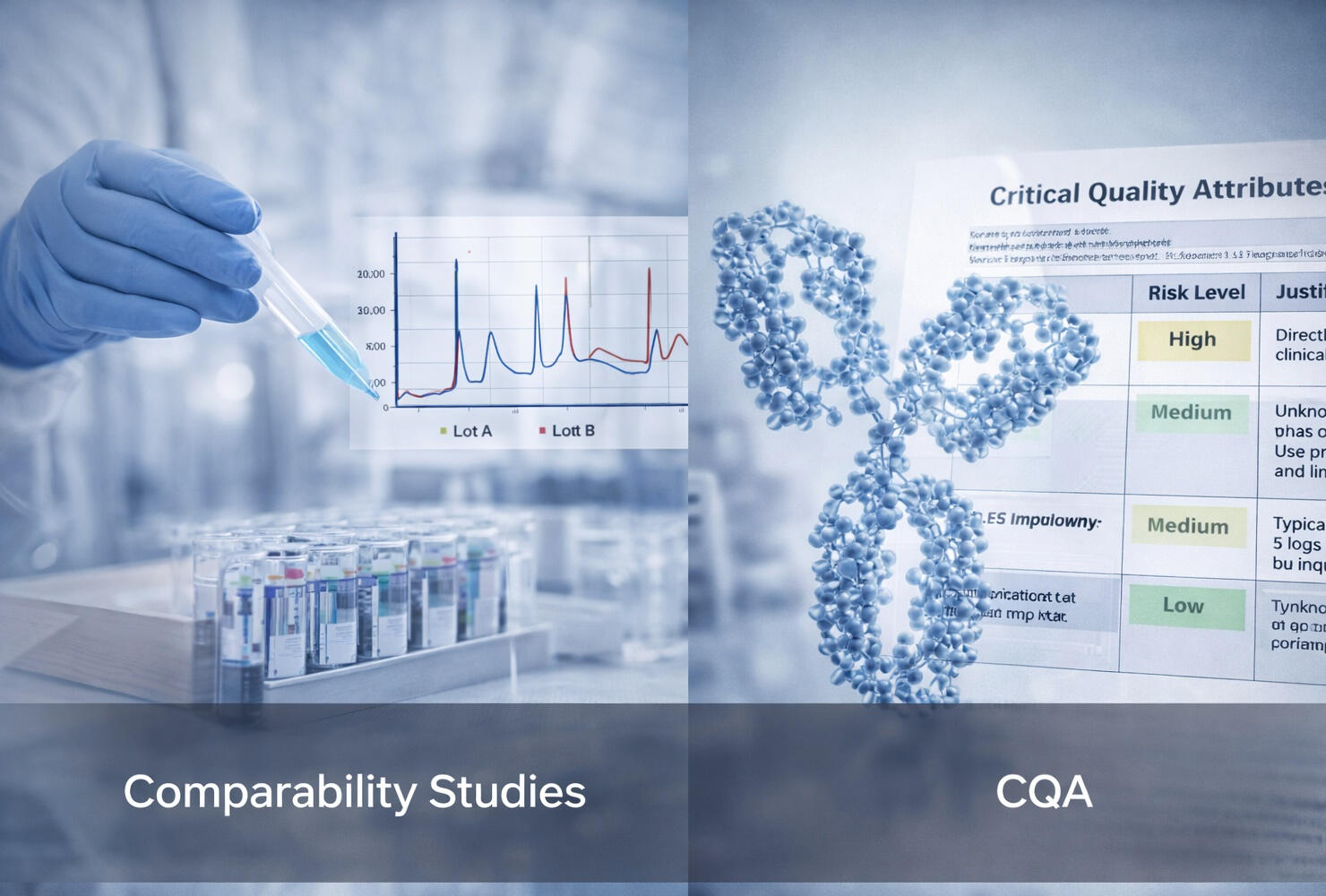
We define critical quality attributes (CQAs) using a science- and risk-based approach grounded in product knowledge and clinical relevance, delivering clear, regulatory-ready documentation aligned with your overall control strategy. We bring deep experience in the design of comparability study protocols and provide tailored strategies and parameters for developing robust methods to verify clearance of challenging process impurities, including β-glucan, dextran sulfate, and Pluronic F-68.In the post-marketing phase, we support FDA post-marketing commitments (PMCs) and design bridging studies following method improvements to effectively address regulatory questions and ensure continued compliance.
Specification and Justification of Specification
Specification and Justification of Specification
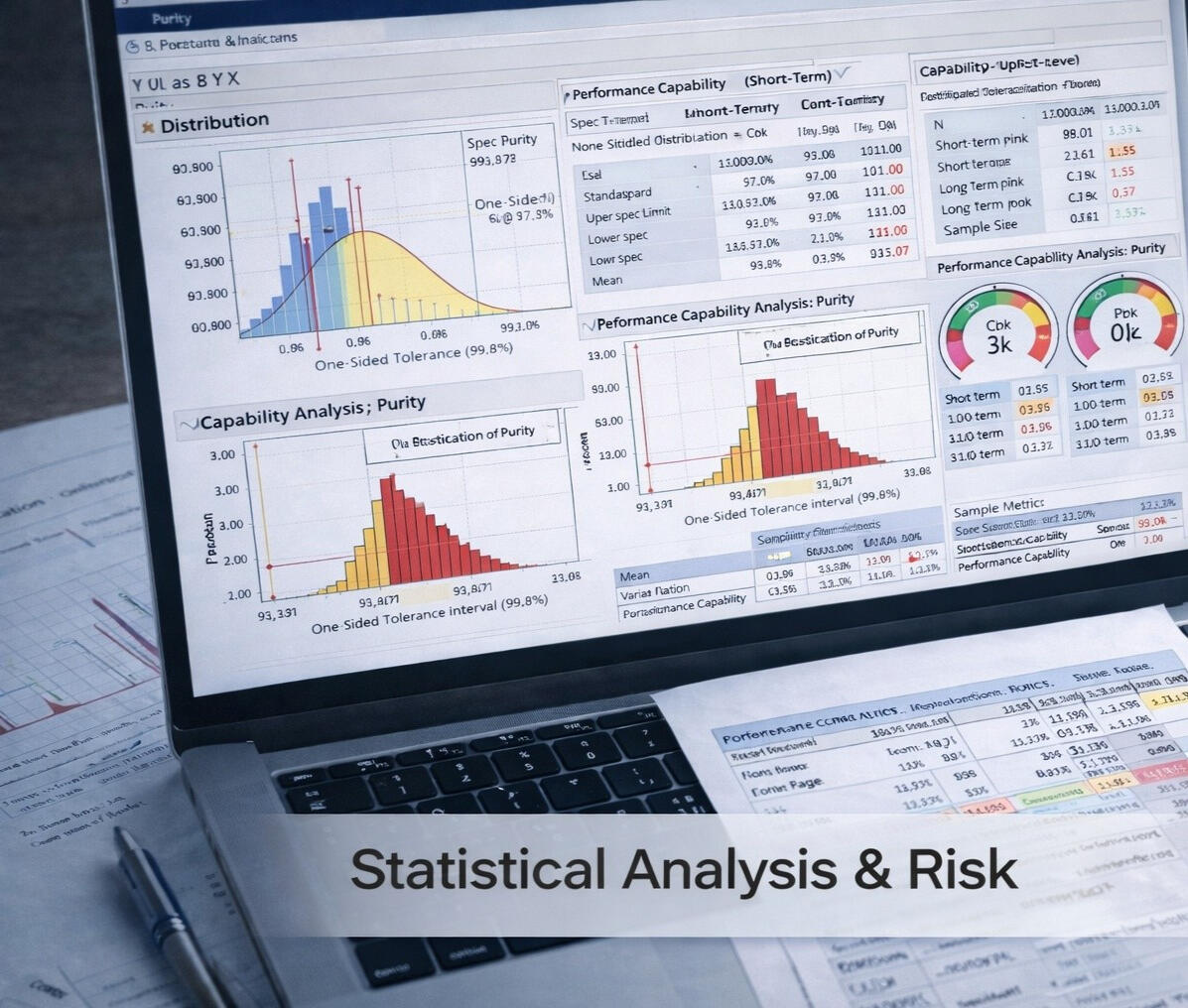
We apply a science- and risk-based approach to develop clinically meaningful, regulatory-ready specifications for biologics. Starting from critical quality attributes (CQAs), we align each test with product safety, efficacy, and process control, ensuring analytical methods are fit-for-purpose and stability-indicating. Using manufacturing history, clinical and stability data, and statistical evaluation of process capability, we establish acceptance criteria that balance sensitivity with operational robustness. We then back-test proposed specifications using process capability analysis (e.g., Ppk) to ensure a low risk of failure during PPQ and routine manufacturing. Our approach differentiates release and shelf-life specifications, integrates upstream controls where appropriate, and delivers clear, defensible justifications aligned with regulatory expectations (ICH Q6B, Q14), enabling confident submission and lifecycle management. From years of experince, we help you identigy and pick the right number of attributes to evaluate for your specification.
BLA-Ready Analytical Support
Section 3.2.S and 3.2.P
We provide expert support and regulatory-ready documentation across key BLA Module 3 sections, including:
3.2.S.4 / 3.2.P.5 – Analytical methods, validation, specifications, and justification
3.2.S.3 / 3.2.P.5.5 – Impurity characterization and control strategies
3.2.S.5 – Reference standard qualification and lifecycle
3.2.P.2 – Analytical method development and evolution
3.2.P.7 – Container closure integrity (USP <1207>)

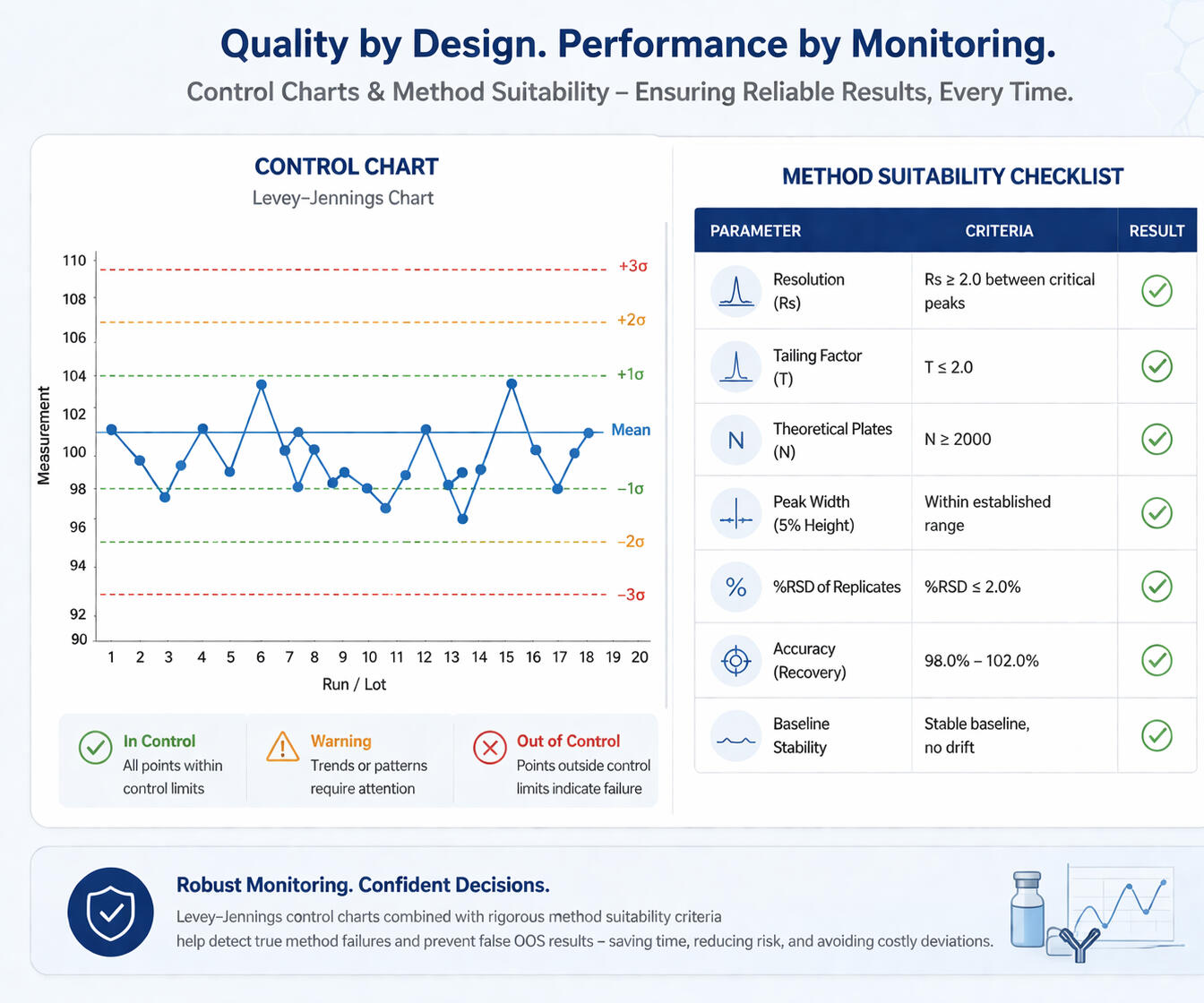
Control Charts, Method Suitability and Alignment of DS and DP
With extensive experience in post-commercial performance evaluation of biologics, we establish robust control strategies for reference standards, including the implementation of Levey–Jennings control charts. We define scientifically justified limits for critical attributes within method system suitability criteria, enabling early detection of true method failures (invalid runs) while minimizing the risk of false failures (OOS results). This approach reduces unnecessary investigations and helps avoid costly deviations.
Fill Out Your Request Below
We will get back to you in 24 hours
Done
Looking Forward to Meet you!